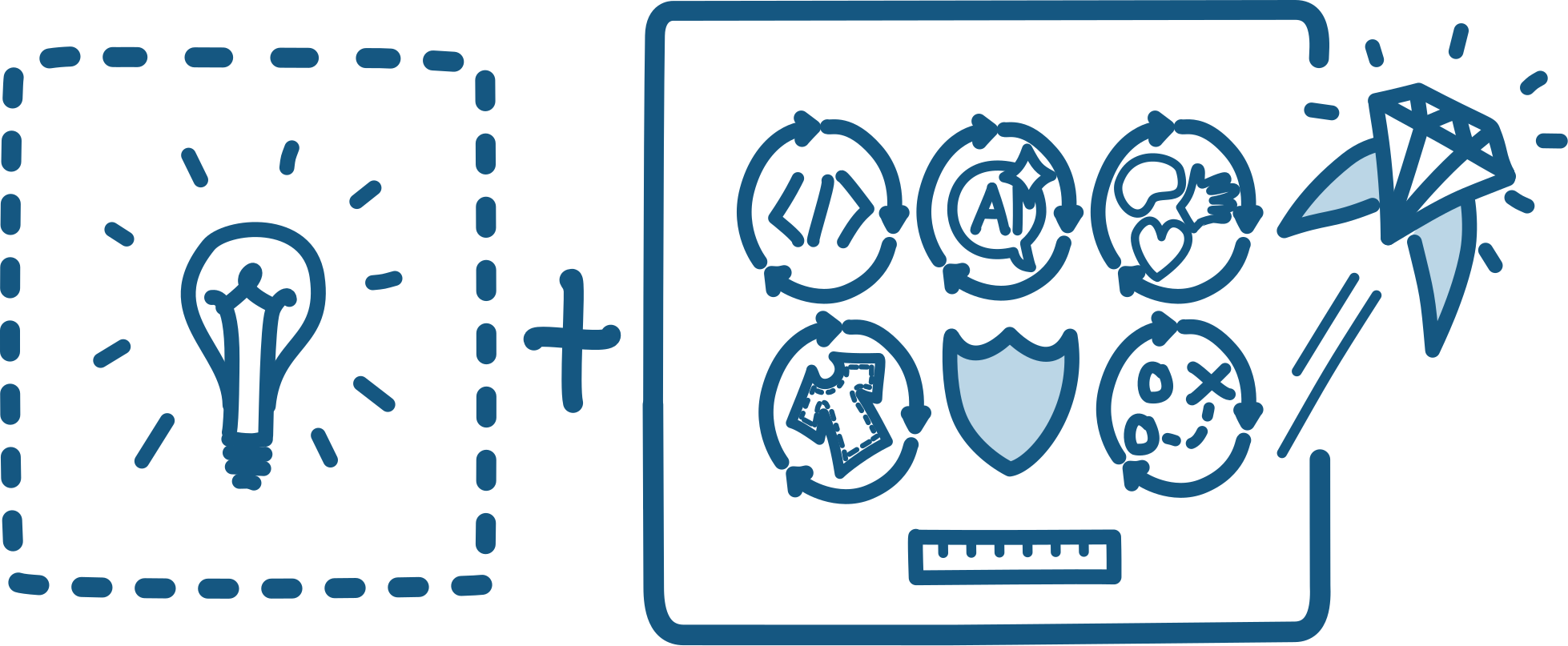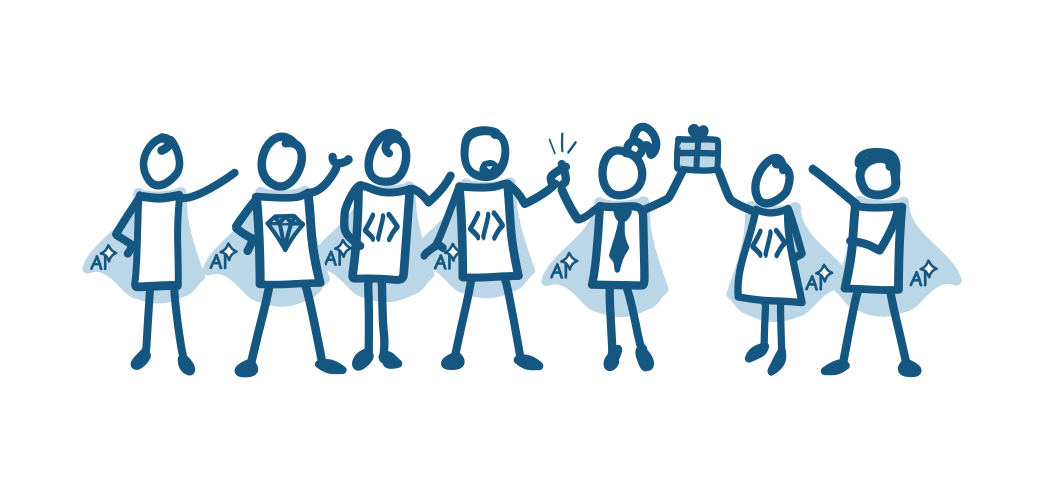
Enablement should be an accelerator, not a gate.
Teams are waiting for central AI functions to grant permission and prescribe recipes. Meanwhile, well-meaning enablement teams often wait for an ill-defined level of maturity before enabling anyone else.
The result is a bottleneck: leaders ask for results, teams can't move, and nobody has a credible baseline for value, risk or return.
Trust is not the reward at the end of a long process. It is how useful work begins.
How we work
Build skills anddeliver value,side-by-sidein two days.
Not a transformation program. Not a strategy deck. Our practitioners work alongside your team on one bounded piece of work, and your team owns everything we build.
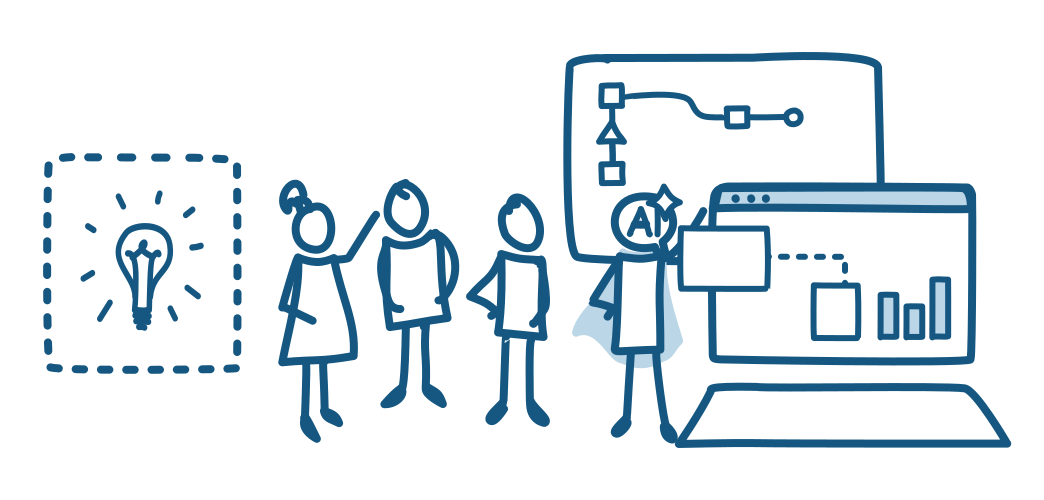
Choose valuable work
One real task where quality, ownership, time and cost can be observed. It can be tiny. It can't be disposable.
Build the shared skill
Encode the team's context, standards and review points in a reusable skill, so good practice travels further than one expert.
Ship with agents
Produce concrete, high-quality work, and capture the evidence needed to repeat it and decide whether scaling pays.
Your team's input becomes insights that show where the business can improve.
The engagement path
Value, trust and predictability at every tier.
Every tier ships usable work, and the more you build and reuse, the more predictable your results become.
-
1
Orientation
Day one
A safe first result for an individual, with a clear data boundary and human review.
-
2
Implementation
Day two
Shared agents and skills for the team, with named owners and visible AI use.
-
3
Distillation
Two weeks
A versioned, reusable kit built from real work, plus a before-and-after baseline.
-
4
Expanding
A few weeks
Connected to the tools teams already use, with scoped access and cost by team.
-
5
Scaling
A few months
A governed portfolio of AI assets, measured against business outcomes.


For CFOs, and everyone accountable for value
More AI use is not the goal.

Do your teams demonstrate the value created for the tokens consumed?
This is how we can do it together.

Establish the baseline
Measure time, cost and quality for the task before AI is involved.
Count accepted output, not generated volume
Track work that passes review and is used, alongside rework and defects.
Capture the full cost
Licences, tokens, integration, review effort, rework and assurance.
Keep it traceable and repeatable
Link every claimed saving to its task, inputs and skill version, and re-run reference tasks as models change.
Your first engagement with Net Advantage
Choose one task. Build one shared skill. Ship something worth keeping.
We start with the smallest useful proof of value, establish trust in the evidence, and let each result earn the right to expand.